

Build intelligent agents you can trust to act.
The Bitligence Agent Control Plane governs every action your agent takes — checked in the path, before it executes — whatever framework you built it on.
New to agents? We author and ship your first one with you — governed from day one. Build with us →
One point of control. Everything else in orbit.
Your agents and the intelligence behind them, the policy, approvals, and audit that govern every action, and the outcomes they drive — all revolve around a single control plane.

Govern The Full Agent Lifecycle — From Build to Runtime.
The control layer between autonomous agents and enterprise action.
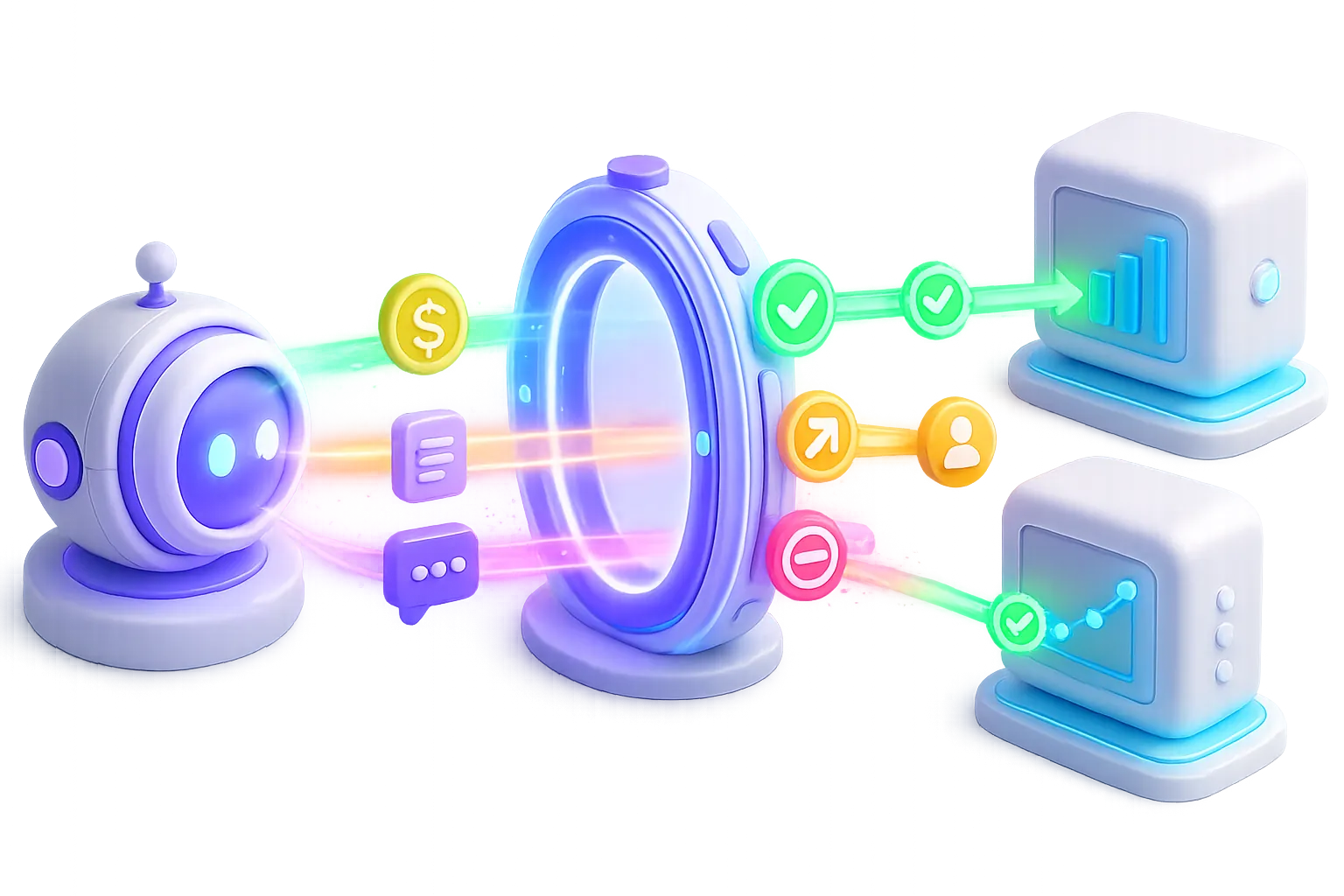
Before an agent touches data, calls a tool, spends money, sends a message, or changes a system of record, the control plane decides whether that action is allowed, blocked, escalated, or recorded.
Eight capabilities make agent autonomy governable, auditable, and safe enough to hand off.


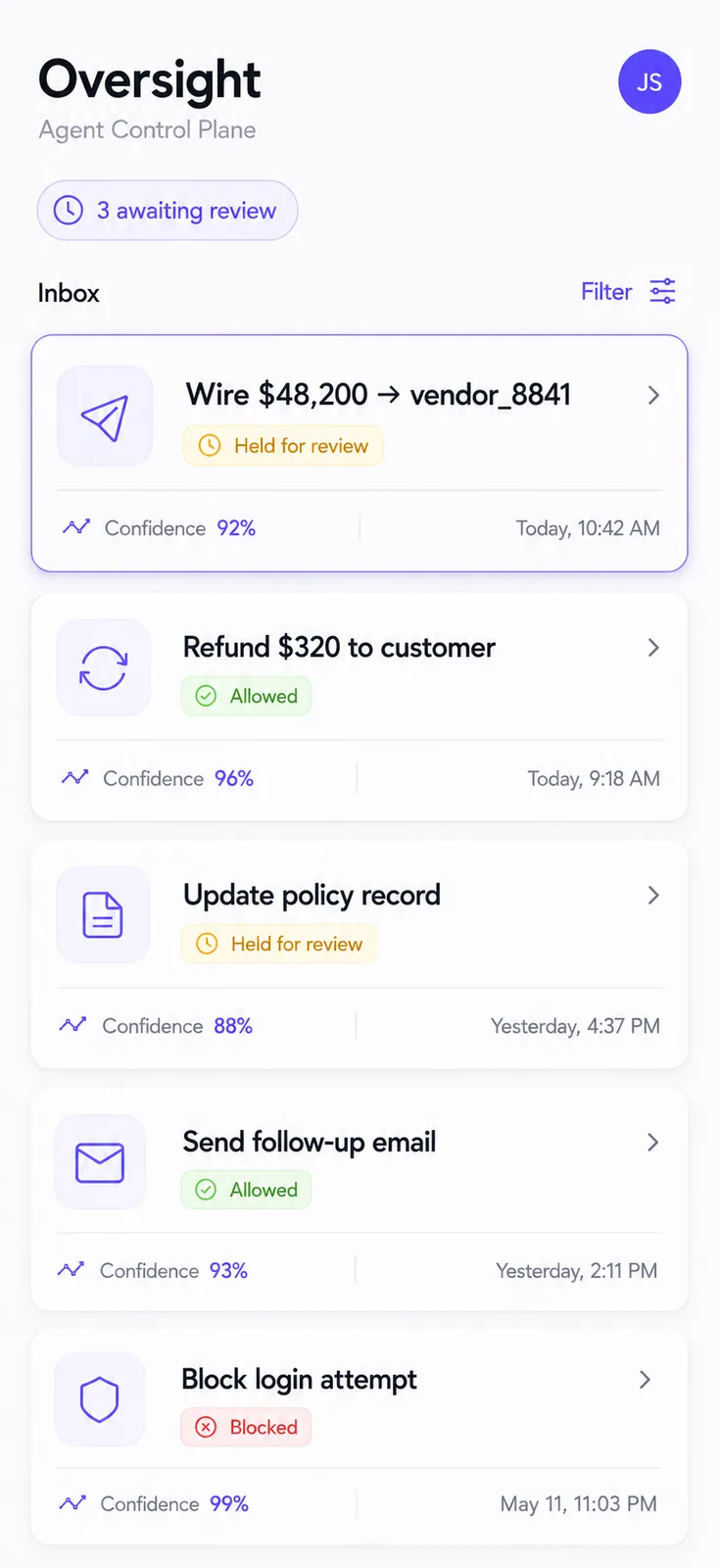






One control plane. Every agent action, in every workflow.
Models bring intelligence; frameworks bring orchestration. Neither decides whether a specific action is allowed. The control plane is the layer that does — in the path, before an agent spends, changes a system of record, or sends a message — judged on the agent’s authority, your policy, live state, and reversibility. Every framework. Every workflow below — and the ones you haven’t named yet.
Claims adjudication
Recommends the payout — auto-settle, route for sign-off, or flag.
Prior authorization
Checks medical necessity — approve, send to a clinician, or deny.
Pharmacovigilance intake
Triages an adverse event, drafts the narrative — auto-file or medical review.
Credit underwriting
Proposes the decision — approve on policy, or send to an underwriter.
KYC & sanctions
Screens identity and hits — clear, escalate to compliance, or block.
Fraud & disputes
Reviews a flagged charge — reverse, hold, or send to an investigator.
Contract review
Extracts clauses, proposes redlines — a hard line between suggest and bind.
Benefits eligibility
Adjudicates a case file — grant, or route to a caseworker.
Customer resolution
Refunds, credits, account changes — act, or hand to a human.
Incident response
Triages and remediates an alert — act, or get on-call approval.
Access provisioning
Grants access on request — auto-provision, or owner sign-off.
Spend & invoice approval
Clears POs against policy — approve to a cap, route the rest.
Vendor onboarding
Vets a supplier, proposes terms — proceed, or risk review.
Quote & discount
Prices and discounts a deal — within bounds, or manager approval.
Your workflow
If your agents recommend, route, draft, approve, or act on something that matters — the plane governs it.
One control plane, not six point tools.
Most teams buy a separate tool for each agent risk — one to watch, one for policy, one for audit, another for cost. Because every action already passes through the Agent Control Plane, you get all of it in one place: conflicts resolved, policy enforced, a signed audit trail, unsafe messages stopped, failures pinpointed, collusion caught, and cost capped. One policy surface, one record — not a rack of tools to integrate.
Why agents need a control plane — and why it’s ours.

Agents act before anyone checks.
Agents have moved from answering questions to taking actions — moving money, updating records, messaging customers. In most enterprises nothing stands between the agent and the action. By the time a mistake shows up, it has already happened.
A control plane in the path of every action.
Bitligence checks each action the instant before it runs — against the agent’s identity, your policy, and live system state — then allows it, blocks it, escalates to a human, or records it. Governance stops being a document and becomes enforcement.
Enforcement, not observability.
Dashboards tell you what an agent did. Bitligence decides what it’s allowed to do — in the path, on any framework, every decision signed and replayable. Already live governing real agents in insurance claims today.
Watching an agent isn’t the same as stopping it.
Observability tools watch from outside and report what already happened. Bitligence stands in the path of every action — so it can see it, stop it, and prove it before it runs.

In the path, not on the sidelines
Observability tools watch from outside and report what already happened. Bitligence sits in the path of every action — deciding before it runs, not after.

Stops the exact action
Policy is written over what the agent actually does, so the wrong action is blocked the moment it’s decided — not crudely cut off at the network edge.

Proves it, doesn’t just log it
A tamper-proof, signed record you can replay exactly — not logs that tell you what happened but can’t reconstruct it.

Keeps you in control after launch
Pause an agent mid-run for a human and resume cleanly, catch real drift from a known-good version, cap spend live, and roll back or revoke.
However your agents got here, they run under one control plane.
You already have agents.
Put them under control — govern, enforce, and audit every action on any framework. No rebuild, no lock-in. Learn more
Govern my agents →You don’t have them yet.
We build and ship your first agent with you — safe to act from day one, governed by the same control plane the moment it goes live. Learn more
Build with us →Either way, you end up in the same place: agents in production that you can trust to act.
Put a trustworthy agent on your workflow.
Start where autonomy matters, the actions are valuable, and control can’t be bolted on later. We’ll scope it with you.